

Quick answer: Teeth grinding in children, called bruxism, usually happens because of developing jaw alignment, the normal eruption of new teeth, or restless sleep. It is common, often harmless, and frequently outgrown by adolescence. Grinding becomes a concern when it wears down enamel, causes jaw or facial pain, or disrupts sleep. A Great Falls pediatric dentist can check the teeth and recommend treatment if needed.
Why This Matters for Great Falls Families
Bruxism in children is widespread. National survey data has estimated that grinding affects a significant share of children, with most cases appearing between toddlerhood and the early school years (Source: National Institutes of Health).
Many Montana parents first notice the sound at night, often during the long, dry winters when colds, congestion, and disrupted sleep are common across Cascade County. Because grinding usually happens during sleep, children rarely report it themselves, so a parent or caregiver is typically the one who catches it.
The reassuring part: childhood grinding is different from adult grinding. In adults it is more strongly tied to chronic stress and permanent teeth. In children it often resolves on its own as primary teeth give way to permanent ones and the bite settles.
What causes teeth grinding in children?
Childhood grinding usually traces back to one of a few normal developmental factors rather than a single illness.
The most common drivers include:
- Jaw and bite development. As primary and permanent teeth come in, the upper and lower teeth do not always meet evenly. Grinding can be the child’s natural way of testing a new bite.
- Teething and new tooth eruption. Discomfort from emerging teeth can trigger clenching and grinding, especially in toddlers and again around age 6 when molars arrive.
- Restless or disrupted sleep. Grinding often clusters in lighter sleep stages. Congestion, allergies, and colds, all common during Great Falls winters, can fragment sleep and increase grinding.
- Airway and breathing issues. Enlarged tonsils or adenoids and mouth breathing are associated with grinding in some children and deserve evaluation.
- Stress or routine changes. A new school, a move, or family changes can show up at night as grinding.
Identifying the likely cause matters because it shapes the response. Grinding tied to a temporary cold is handled differently from grinding linked to a breathing problem.
Is teeth grinding harmful for children?
In most cases, occasional grinding of baby teeth is not harmful and does not require treatment. It becomes harmful when it is frequent and forceful enough to wear down enamel, fracture teeth, or cause pain.
Watch for these signs that grinding has crossed from harmless to harmful:
- Flattened, chipped, or worn-looking teeth
- Complaints of jaw soreness, earaches, or morning headaches
- Increased tooth sensitivity to hot or cold
- Grinding loud enough to be heard from another room, most nights
If you notice any of these, it is worth a professional check. Worn enamel does not grow back, so catching heavy grinding early protects the teeth that guide permanent ones into place.
How can I stop my child from grinding their teeth?
There is no single switch that stops grinding, but a combination of sleep, comfort, and dental steps reduces it for most children.
- Build a calming bedtime routine. Wind-down time, a warm bath, and screen-free minutes before bed lower the restless sleep that fuels grinding.
- Manage congestion. Treating allergies and colds and keeping bedroom air from getting too dry during Montana winters can ease nighttime breathing and reduce grinding.
- Keep daytime jaws relaxed. Discourage gum chewing and chewing on pencils or toys, which keep jaw muscles in a clenching habit.
- Address stress gently. Talk through worries and keep routines predictable during transitions.
- See a pediatric dentist. A dentist can measure enamel wear, check the bite and airway, and decide whether a protective appliance or referral is appropriate.
For children with significant enamel wear, a custom night guard may be considered, but unlike with adults, dentists are cautious with growing mouths because a rigid appliance can interfere with eruption. That decision should always be made by a pediatric specialist, not a store-bought product.
Do children outgrow teeth grinding?
Yes. Most children outgrow bruxism. Grinding commonly fades as baby teeth are replaced by permanent teeth and the bite stabilizes, often by the early teen years.
Because grinding usually self-resolves, the goal during childhood is to protect the teeth and watch for the small number of cases that signal an airway or bite problem needing treatment. Routine checkups make that monitoring easy, since a dentist can track enamel wear visit to visit.
How is teeth grinding in children diagnosed?
A pediatric dentist diagnoses bruxism by examining the teeth for wear patterns, asking about sleep and symptoms, and ruling out bite or airway issues. There is no single test; the picture comes from the exam plus what parents report.
During a checkup, the dentist looks closely at the biting surfaces of the molars and the edges of the front teeth. Grinding leaves a characteristic flattened, polished look that a trained eye recognizes quickly. The dentist also checks how the upper and lower teeth meet, since an uneven bite can drive grinding.
Because parents are the ones who hear the grinding, your observations carry real weight. Noting how many nights a week it happens, whether it lines up with colds or congestion, and whether your child complains of any morning soreness gives the dentist the context an exam alone cannot provide.
- Visual exam for flattened or worn tooth surfaces
- Bite assessment to see how the teeth align
- Questions about sleep quality, snoring, and breathing
- Review of recent colds, allergies, or congestion
- Tracking changes in wear from one visit to the next
Can grinding be a sign of a sleep or breathing problem?
Sometimes. In a subset of children, nighttime grinding is linked to disrupted breathing during sleep, such as from enlarged tonsils or adenoids. When grinding comes with snoring, mouth breathing, or restless sleep, it is worth mentioning to your dentist and pediatrician.
Most childhood grinding is benign and tied to development. But because the airway and the jaw are connected, persistent grinding alongside loud snoring or pauses in breathing can be a clue worth following up. Identifying and addressing an airway issue can improve both sleep and grinding.
This is one more reason not to dismiss frequent grinding as just a phase. A short conversation with your child’s dentist can sort out which cases are ordinary and which deserve a closer look at sleep and breathing.
What can I expect at a visit for my child’s grinding?
A grinding-focused visit is short and low-stress. The dentist examines the teeth, reviews your notes on the pattern, checks the bite and airway, and explains whether monitoring, a protective approach, or a referral makes sense for your child.
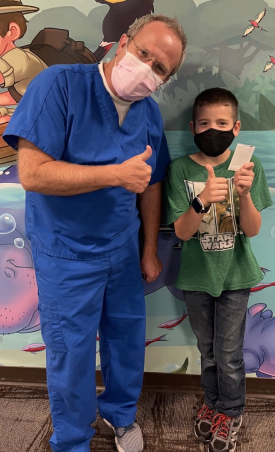
There is nothing intimidating about bringing a child in for grinding. In our jungle-themed office, the visit feels like a routine checkup. The dentist looks at how the teeth are wearing, asks about sleep and any morning complaints, and puts the whole picture together with what you have observed at home.
From there, the plan is tailored. For most children, the recommendation is simple monitoring and good sleep habits, with a recheck at the next routine visit to compare enamel wear. For the smaller number with significant wear or airway signs, the dentist discusses next steps, which may include a protective appliance chosen specifically for a growing mouth or a referral for a breathing evaluation. Either way, you leave knowing whether the grinding is something to watch or something to act on.
- A calm, checkup-style exam in a child-friendly setting
- Review of your at-home observations
- A clear recommendation: monitor, protect, or refer
- A recheck plan to track enamel wear over time
Harmless Grinding vs Grinding That Needs Attention
| Factor | Usually Harmless | Worth a Dental Check |
|---|---|---|
| Frequency | Occasional, a few nights here and there | Most nights, often loud enough to hear from another room |
| Teeth | No visible change to tooth surfaces | Flattened, chipped, or worn edges |
| Pain | No complaints of jaw or face pain | Morning headaches, jaw soreness, or earaches |
| Sensitivity | Normal response to hot and cold | New or increased sensitivity |
| Pattern | Eases as colds or congestion clear | Persists regardless of season or health |
| Sleep | Sleeps soundly otherwise | Restless sleep, snoring, or pauses in breathing |
Quick Home Checklist for Parents
- Note how many nights per week you hear grinding
- Look at the front teeth in good light for flat or chipped edges
- Ask your child about jaw soreness or morning headaches
- Track whether grinding worsens with colds or congestion
- Bring these notes to the next dental visit
Myth Check
Is it true that teeth grinding always means a child has worms or a parasite?
No. This is a long-standing myth. There is no reliable evidence that intestinal parasites cause teeth grinding in children. Grinding is far more commonly linked to jaw development, tooth eruption, and disrupted sleep. If you have concerns about your child’s health, raise them with your pediatrician rather than assuming a parasite is the cause.
More Questions Parents Ask
At what age does teeth grinding usually start?
It often appears in toddlers after the first teeth arrive and again around age 6 as the first permanent molars come in.
Should I wake my child if I hear grinding?
No. Waking the child is not necessary and disrupts their sleep. Note the pattern and mention it at the next dental visit instead.
Can a store-bought night guard fix my child’s grinding?
Over-the-counter guards are designed for adults and can interfere with a growing child’s tooth eruption. Any appliance for a child should be evaluated and fitted by a pediatric dentist.
Does grinding mean my child needs braces?
Not necessarily. Grinding can be linked to bite development, but only an exam can determine whether orthodontic evaluation is appropriate.
Key Facts at a Glance
- Childhood bruxism is common and usually outgrown by the teen years
- Worn, flat, or chipped teeth and morning jaw pain are the main warning signs
- Congestion and restless sleep, frequent in Great Falls winters, can increase grinding
- Enamel does not regenerate, so heavy grinding should be checked early
- Night guards for children are decided case by case by a pediatric specialist
What Great Falls Families Say
Parents often raise grinding during routine checkups, where a calm visit makes it easy to talk through concerns.
“The atmosphere is very comforting and calming, and the staff was very professional.”
Brad C., verified patient review
Great Falls Pediatric Dentistry & Orthodontics is rated 4.9 out of 5 stars across verified patient reviews
Worried About Your Child’s Grinding? Get a Simple, Reassuring Check
If your child’s grinding is frequent, loud, or paired with worn teeth or jaw pain, a short exam can tell you whether it is harmless or worth treating. At Great Falls Pediatric Dentistry & Orthodontics in Great Falls, our team checks enamel wear, bite, and airway in a calm, kid-friendly setting, and serves families across Great Falls and Havre, MT.
Call (406) 205-3586 to schedule a checkup. You can also learn more about routine checkups and gentle cleanings or, if a tooth looks chipped from grinding, our approach to tooth-colored fillings.