

Quick answer: Bottle feeding tooth decay happens when sugary liquids like milk, formula, or juice pool around a baby’s teeth for long periods, especially during naps or overnight. Bacteria feed on those sugars and produce acid that erodes enamel. This is called baby bottle tooth decay, and it most often affects the upper front teeth. It is largely preventable with simple feeding and cleaning habits.
Why This Matters for Great Falls Families
Baby teeth are not disposable. They hold space for permanent teeth, guide jaw development, and let a child eat and speak comfortably. When decay sets in early, those jobs are at risk.
Early childhood tooth decay is one of the most common chronic conditions of childhood in the United States, and it is largely preventable (Source: Centers for Disease Control and Prevention). Decay that starts on baby teeth can lead to pain, infection, and early tooth loss, which can crowd the permanent teeth that follow.
For families across Great Falls and Havre, MT, the encouraging news is that a few targeted habits, plus an early first dental visit, prevent the large majority of these cavities.
What is baby bottle tooth decay?
Baby bottle tooth decay, also called early childhood caries or nursing bottle caries, is tooth decay in infants and toddlers caused by frequent, prolonged exposure to sugary liquids. It typically appears first on the upper front teeth as dull white or brown spots near the gum line.
The pattern is specific. When a baby falls asleep with a bottle, the flow of saliva that normally rinses the mouth slows down. Liquid sits against the teeth for an hour or more, and the sugars in milk, formula, breast milk, or juice become fuel for cavity-causing bacteria. The acid those bacteria release dissolves enamel.
Which liquids are most likely to cause decay?
Any liquid other than plain water can contribute to decay if a baby sips it slowly over long periods or sleeps with it. Sugar content and contact time both matter.
- Fruit juice: high in natural sugar and acid, one of the highest-risk drinks for young teeth
- Formula and milk: contain sugars that bacteria can use, especially during overnight pooling
- Sweetened water, soda, or sports drinks: high sugar and acidity, not appropriate for infants
- Plain water: the only drink safe to offer in a bottle at nap or bedtime
The risk is less about a single feeding and more about how long teeth stay bathed in sugar. Sipping a juice bottle across an entire afternoon can be worse for enamel than drinking the same juice in one sitting.
What are the early warning signs?
The earliest sign is a chalky white line or spot along the gum line of the upper front teeth. Left untreated, those spots turn yellow, then brown, and can break down into visible cavities.
- Dull white bands near the gum line of the upper front teeth
- Brown or black spots as decay advances
- Sensitivity, fussiness during feeding, or signs of tooth pain
- Visible pitting or broken enamel in later stages
White-spot lesions caught early can sometimes be remineralized before they become true cavities, which is one of the strongest reasons for an early first dental visit.
How can I prevent baby bottle tooth decay?
Prevention comes down to limiting how long teeth are exposed to sugar and keeping the mouth clean from the very first tooth.
- Never put your baby to bed with a bottle of anything but plain water.
- Finish feedings before sleep, then wipe the gums and teeth with a clean, damp cloth.
- Avoid juice in bottles. If juice is offered at all, serve a small amount in an open cup with a meal.
- Start brushing as soon as the first tooth appears, using a smear of fluoride toothpaste the size of a grain of rice.
- Move from bottle to cup around the first birthday to reduce prolonged sipping.
- Schedule the first dental visit by age one so a dentist can catch early spots.
The American Academy of Pediatric Dentistry recommends a child’s first dental visit by their first birthday or within six months of the first tooth (Source: American Academy of Pediatric Dentistry). That visit is the single best moment to catch early decay and personalize prevention.
How is baby bottle tooth decay treated?
Treatment depends on how far the decay has progressed. Very early white spots may be reversed with fluoride and improved habits, while cavities that have formed need restorative treatment from a pediatric dentist.
Caught at the white-spot stage, decay can sometimes be halted or reversed by strengthening the enamel with fluoride and removing the sugar exposure that started it. This is the best-case scenario and the reason early visits matter so much.
Once a cavity has broken through the enamel, the tooth needs treatment to stop the decay from spreading and to relieve or prevent pain. Depending on severity, that can range from a small filling to a crown on a badly affected baby molar, and in advanced cases more involved care. A pediatric dentist chooses the gentlest effective option for a young child.
- Early white spots: fluoride and habit changes to remineralize
- Small cavities: tooth-colored fillings
- Larger decay on back teeth: crowns to protect the tooth
- Advanced cases: more involved treatment to save the tooth and prevent infection
When should my child stop using a bottle?
Most pediatric guidance suggests weaning from the bottle to a cup around the first birthday and completing the transition by 18 months. Prolonged bottle use raises the risk of both decay and bite problems.
Moving to an open or straw cup reduces the long, slow sipping that bathes teeth in sugar, and it also supports healthy oral development. The change does not have to happen overnight. Many families start by replacing one bottle at a time with a cup, beginning with daytime feeds and saving the bedtime bottle for last, switched to water.
If your toddler is attached to a bedtime bottle, your pediatric dentist can help you make the transition in a way that protects the teeth in the meantime.
What is the difference between baby bottle decay and normal cavities?
Baby bottle tooth decay is a specific early pattern caused by prolonged exposure to sugary liquids, and it classically strikes the upper front teeth of infants and toddlers. Ordinary cavities can occur on any tooth at any age from a mix of diet and hygiene factors.
The distinction is mostly about cause and pattern. Baby bottle decay is driven by liquids pooling on the teeth during sleep, so it tends to hit the upper front teeth first and can appear strikingly early, even before a child’s second birthday. That early, front-tooth pattern is what makes it recognizable.
General cavities follow the same underlying acid-and-bacteria process but are not tied to bottle use specifically. They develop over time from frequent sugar exposure and incomplete brushing, and they often show up on the chewing surfaces and between the back teeth. Understanding which pattern you are dealing with helps target prevention, though the daily habits that protect against both are largely the same.
- Bottle decay: prolonged sugary-liquid contact, upper front teeth, very young children
- General cavities: any tooth, any age, from diet and hygiene over time
- Shared prevention: limit sugar contact time, brush with fluoride, see the dentist early
Bottle Contents and Decay Risk
| Liquid | Decay Risk at Sleep Times | Better Use |
|---|---|---|
| Plain water | Safe | The only drink for nap and bedtime bottles |
| Milk | Moderate to high if pooled overnight | With meals, then wipe or brush after |
| Formula | Moderate to high if pooled overnight | Finish before sleep, then clean the gums |
| Breast milk | Moderate with prolonged overnight feeding | Clean teeth after the last feeding |
| Fruit juice | High, sugar plus acid | Limit, serve in an open cup with a meal |
| Soda or sweet drinks | Very high | Not appropriate for infants or toddlers |
Healthy Bottle Habits Checklist
- Bottles at nap and bedtime contain only water
- Gums and teeth wiped or brushed after the last feeding
- Juice limited and served in a cup, not a bottle
- First tooth brushed with a rice-grain smear of fluoride toothpaste
- First dental visit booked by the first birthday
Myth Check
Is it true that cavities in baby teeth do not matter because they fall out anyway?
No. This is one of the most harmful myths in children’s dental health. Baby teeth hold space for permanent teeth, support speech and chewing, and guide jaw growth. Decay in baby teeth can cause pain and infection and can damage the permanent teeth forming underneath. Protecting baby teeth protects the smile that follows.
More Questions Parents Ask
Can breastfed babies get bottle tooth decay?
Yes. Breast milk contains natural sugars, so prolonged overnight nursing combined with poor cleaning can contribute to decay. The same cleaning habits apply.
When should I start cleaning my baby’s mouth?
Wipe the gums with a clean, damp cloth even before teeth appear, and begin brushing the moment the first tooth comes in.
Is fluoride toothpaste safe for babies?
Yes, in the correct amount. A smear the size of a grain of rice is recommended for children under three. Your pediatric dentist can confirm the right amount for your child.
My toddler still uses a bottle at night. What should I do?
Switch the contents to water and begin transitioning to a cup. A pediatric dentist can help you make the change comfortably and check for any early decay.
Key Facts at a Glance
- Decay forms when sugary liquids pool on teeth during naps or overnight
- Upper front teeth are usually affected first
- Early white-spot lesions can sometimes be reversed before becoming cavities
- Only plain water is safe in a bottle at sleep times
- A first dental visit by age one catches problems early
What Great Falls Families Say
Early visits set the tone for a lifetime of healthy habits, and families consistently note how approachable those first appointments feel.
“They have a great atmosphere for kids. They try to make things fun and easy to understand for the kids.”
Verified parent review
Great Falls Pediatric Dentistry & Orthodontics is rated 4.9 out of 5 stars across verified patient reviews.
Protect Your Baby’s First Smile in Great Falls
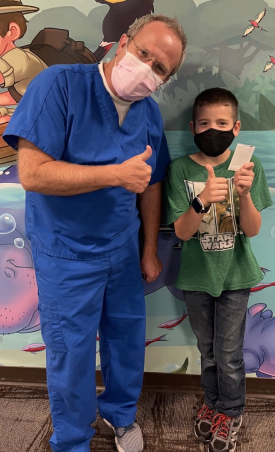
If you have noticed white or brown spots on your child’s front teeth, or you simply want to start prevention the right way, an early visit makes all the difference. Great Falls Pediatric Dentistry & Orthodontics welcomes infants and toddlers in a calm, jungle-themed office and serves families throughout Great Falls and Havre, MT.
Call (406) 205-3586 to book your child’s first visit. You may also find our guides to choosing a pediatric dentist in Great Falls and what to expect during teething helpful as you get started.